Remembering "Screaming Mad" George
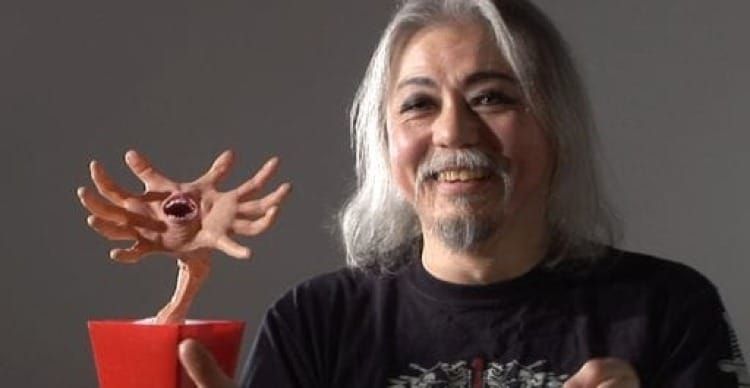
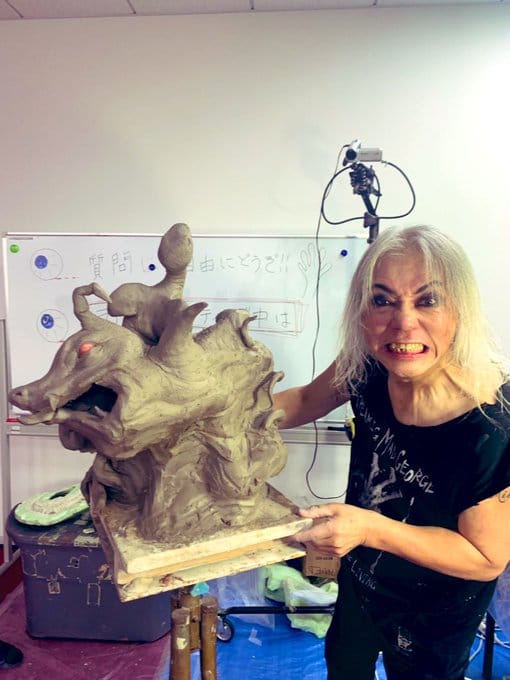
Hi, everyone. Tonight, I got word that the legendary "Screaming Mad" George had passed away back in February this year, which devastates me for so many reasons. He was an incredibly kind person who was generous enough to share his time with me for my book series, he was endlessly creative, and he was truly one of the most singular artists to ever come along in Hollywood. I thought that it might be nice to share his story with the world here, so I'm posting my book interview with him below.
R.I.P., good sir.
“Screaming Mad” George (Joji Tani)
A multi-hyphenate creative maelstrom in both Hollywood and Japan, “Screaming Mad” George is truly an artist in a class of his own, with a career that has spanned the world of punk rock, music video and feature filmmaking. But for George (born Joji Tani), one of his earliest aspirations was spawned from his love of Japanese comic books.
“One of the first things I can remember wanting to be was a cartoonist. I was heavily into Japanese comics, and I started to draw my own comic book and characters myself. When I was little, I went to this international school and then, my parents removed from that school and sent me to a local school so that made my learning delayed a little bit. There were differences between the styles of the two schools, where I couldn’t adapt as quickly as everyone had hoped I would, and I didn’t understand quite a lot of stuff that was going on in class.”
“So, what I did to keep busy was to just keep drawing. But as I started to try and create the stories for the comics, I was having a lot of trouble. I could come up with the ideas, but I could not finish them. That’s when I realized I was much better with illustrations than with stories. And when I was in junior high, I would go to the library when I had free time and that’s when I first encountered Salvador Dali. My life completely changed when I saw his paintings..”
“When I was still in junior high, I started doing oil paintings and when I got to high school, I was painting even larger oil paintings. I had decided that I wanted to be a painter, and after I graduated from high school in Japan, I moved to New York. For the first year, I studied English, and by the second year, I got into the School of Visual Arts in Manhattan. It wasn’t easy, because the first time I took it, I failed the TOEFL (Test of English as a Foreign Language) exam. But when I showed the faculty my painting portfolio, they decided my work was good enough to let me in. So, I was very lucky.”
Despite still struggling with the English language, George’s work propelled him beyond any barriers and left a resounding impression on his teachers, which put his education at the School of Visual Arts on an early fast track. “When I was a freshman, everything I was learning in my classes was very elemental stuff. In the middle of the semester, we had an assignment where we had to paint a self-portrait, and my painting was of my face split in half, with all this skin and eyeballs hanging, and the skull in the middle. When my teacher looked at it, he said, ‘You don’t need to be in this class. You need to be in the second year workshop.’ So, in my second semester, I went onto the second year of school which was great because they gave me a lot of space where I could paint anything I wanted.”
“I had finished another huge painting, and somehow, it got into the end-of-the-year show in school. It was odd because I was technically a first-year student and, usually, those end-of-the-year shows were more for the graduates. But I was so happy that I got picked. During my second year, I found out that I had been awarded a scholarship which was amazing because I didn’t apply for the scholarship or anything. It was great to be able to just keep painting more and more.”
Even as he continued to express himself artistically with a canvas and brush, George was ready to explore other ways to tap into his creative side, and from his desire to create his own style of living, breathing art, his band Disgusting was born during the late 1970s.
“I remember there was this girl in my class, Julien, and she played Ragtime guitar. I had been trying to learn the Ragtime guitar at the time, and asked her if she could help me get better, and we just started playing together, which led to us becoming a band. We started finding other people to join Disgusting, which was our first name, and all of this was happening right in the middle of the punk movement, which was very cool. For me, the idea of stage performance was that it was a very expressive way for me to be creative. Painting as an artform is very stiff because it’s just this one perspective of this one image. But, with live performance, you’re adding in that movement and you can tell a story.”
“When I was performing, I wanted to do something that was very shocking, so I remember that during one of the songs, I pulled up my t-shirt and I pretended to split my stomach, with my guts and all this blood is falling down right in the middle of everything. And then, I wrapped my neck with the guts and kept on singing. For the last gag, I made a fake penis with blood inside, which was really just red paint inside of a condom. But I would strap on the fake penis so at the end of the show, I would open my zipper and castrate myself with huge scissors. I really wanted to give people a lot of theatrical gore.”
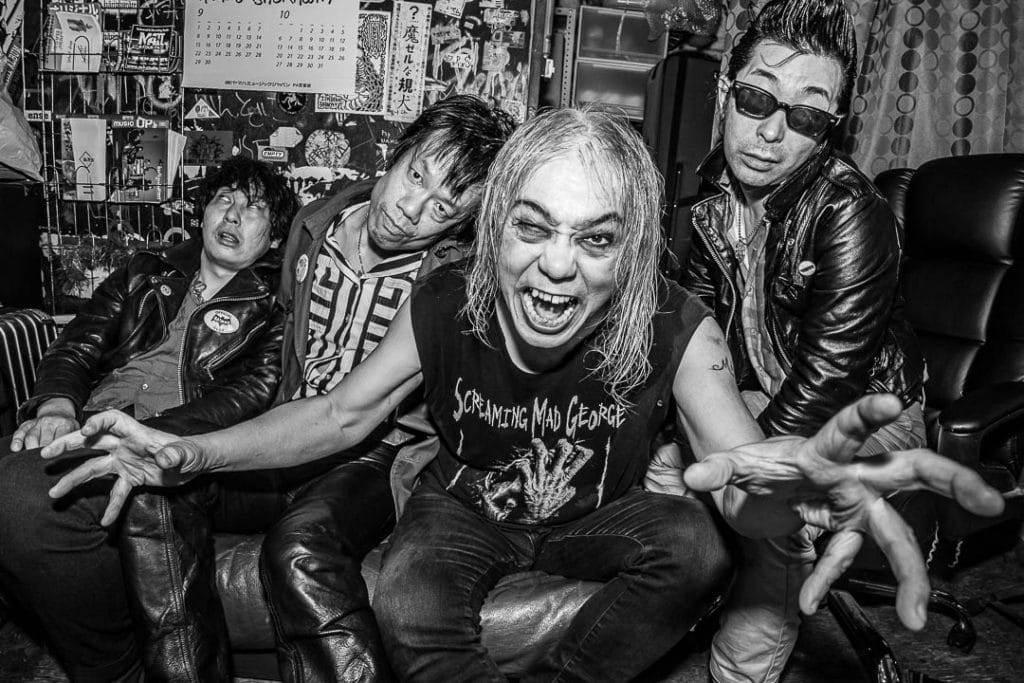
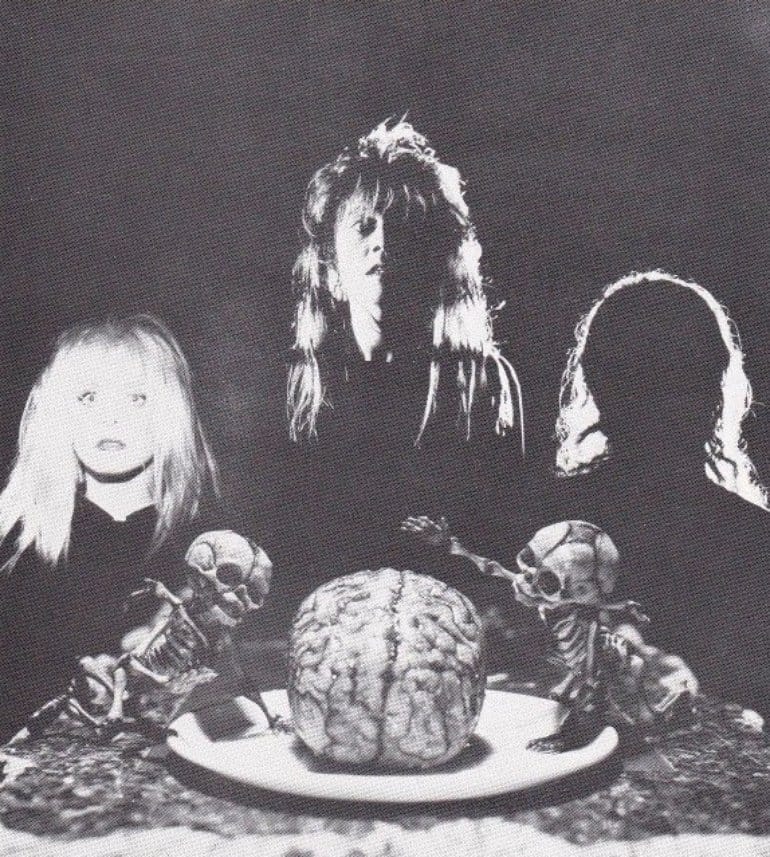
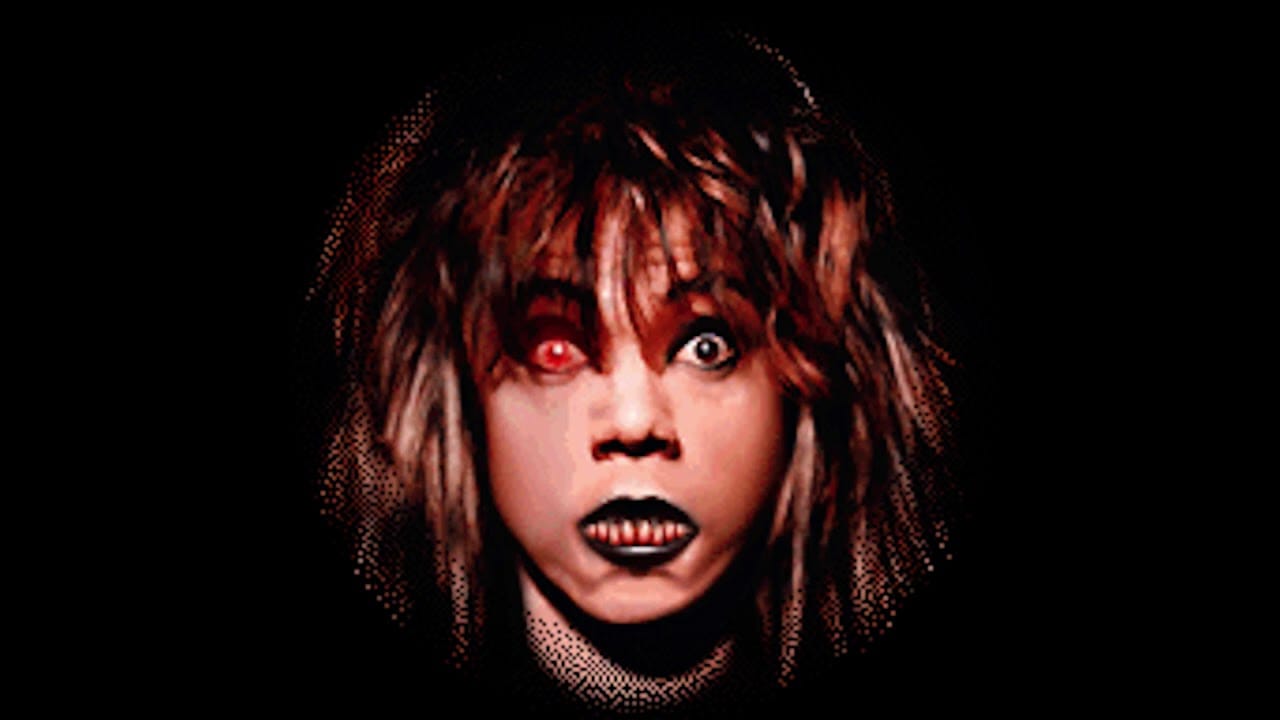
“At the time, a lot of punk music was about wanting to die young, where musicians wanted to destroy themselves, and I wasn’t really keen on that idea. That felt too real to me, and that wasn’t what I enjoyed. To me, everything was about theatricality and surrealism, and if you act it all out realistically enough, you can still give the audience the same kind of impact, and take things even further, which is how I realized just great special effects could be. And I definitely did not realize it at the time, but that was the beginning of my special makeup effects career.”
“Screaming Mad” George continued to perform in New York’s punk scene, eventually changing the band’s name from Disgusting to The Mad, and he also adopted a new performance style to go with the group’s new moniker. “For The Mad, I became the front person and lead singer. I created most of the concepts and the music, and every show, there was something different that would happen. What we were doing was more surreal than anything else, so it became about creating something that was bizarre and weird rather than it was to do all this blood and gore.”
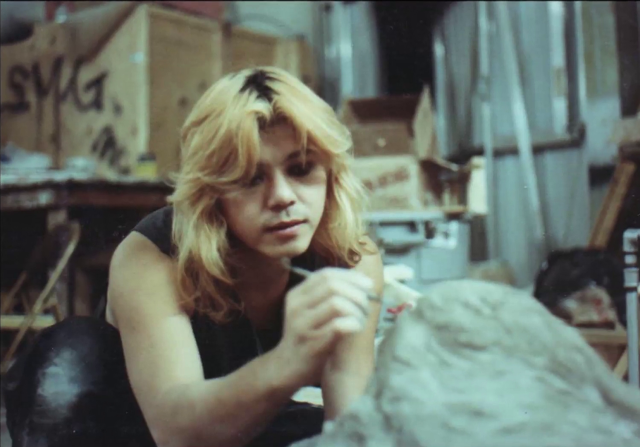
After he graduated from the School of Visual Arts, George decided to not only change up his band name from The Mad to IRRATIONAL, but he also switched up the music style as well. “That’s when I started making full body suits. After I saw Dick Smith’s work on Altered States (1980), which was a suit of muscles and veins from head to toe, I said, ‘Oh, I have to make this.’ So, I sculpted and made the suit, and had to figure it all out for myself because there were no schools around for this type of thing. But I began to realize that I had to start making some money because the band wasn’t making any money, and so that’s when I decided to shift my career towards becoming a special makeup effects artist.”
“ I made a 15-minute short film that were five of our songs that I knew I could do specific special effects sequences for each song. It was a portfolio piece, basically, and I started sending out these videos to see what would happen. I sent one of the tapes to my friend, Shinji Nakako, who was a Japanese journalist that had been writing about special effects. He was a friend of Rob Bottin, Rick Baker, Steve Johnson – a lot of famous effects artists. He passed it on for me, and that’s when I decided to go to Los Angeles to meet with the big guys.”
When he ventured out to the West Coast, George wasn’t sure exactly what would come of his trip, but he quickly found an opportunity to start making a name for himself in the industry alongside some legendary talents. “One of the first people I talked to was Rick Baker, and I asked him if I could work for him for free for a year, because I knew I needed to get my foot into the business. I had the support of my father, so I just wanted the chance to work for the best. At first, Rick wasn’t really into the idea, but I kept pushing, and eventually he said yes. So, I went back to New York to get ready and I moved to L.A. a few months later. But, when I got there, Rick had decided to take off for a year and was handing off Cocoon (1985) to Greg Cannom. I didn’t know what I was going to do, but Greg was great and allowed me to work on the film with him, so that’s how I got my official start in the makeup effects industry.”
“Of course, I wasn’t doing any creative things on Cocoon because I was just starting out,” George explained. “So, I was sweeping floors, helping everyone mix polyfoam and silicone, just the everyday work that needed to get done. One of my main responsibilities was that I had to buy materials, which was great because I started learning about all these different materials and where I could get them, because I had no idea.”
“Because I was working for Greg for free, I was only working on Cocoon three days a week, so I asked him if I could come into the shop on the other days to work on my own projects. I wanted to keep doing creative things, and Halloween was coming up, and I wanted to make something to wear. Greg agreed to let me do it, but I think he was expecting me to make some small appliances or masks, but I was making a full body monster suit. I did my body cast, and everyone kept telling me there wasn’t a way to make a full body monster suit, but I did it. I ended up taking over 10 feet of space working on it, and I’m sure Greg was surprised, but I don’t think he was going to tell me to stop at that point either.”
“What really helped me was that I was at this shop around all these skilled professionals. Everything I was doing at that time was self-taught, but just by watching all those people, I learned so much. I could see all the things that I was missing to succeed in making molds or sculpting or even mechanics. Everybody was so helpful, and that year, I went to the big effects industry Halloween party, and I won one of the categories because of that full monster suit.”
Once Cocoon was wrapped, George found himself at a crossroads, as he wasn’t sure just where his career was headed next. Rick Baker wasn’t crewing up for any new projects just yet, and he began to get nervous about his prospects. But it ended up being his impressive Halloween costume that led to him being contacted by another effects legend, Steve Johnson, who ultimately brought him into the fold at Boss Films for an upcoming project.
“When Rick said he wasn’t going to need anyone for a while, I was a nervous, because I didn’t know what I was going to do,” admitted George. “Out of the blue, I got a call from Steve Johnson who told me he liked the monster suit I had built and watched my video, and wanted me to come in for something because of my sense of surrealism. That ended up being Poltergeist II (1986) When I started though, they were still wrapping up Fright Night, (1985) so I painted some lenses and background stuff, and got to go to set as a puppeteer for the bat creature’s eyes. And we started Poltergeist II, Steve made me in charge of the vomit creature. I couldn’t believe he put me in charge of something like that. It was just amazing.”
“My biggest worry was that I just didn’t want to disappoint Steve, so I was always working as hard as possible and really put my everything in my work. And in the end, I think the vomit creature came out really well. I was so happy with it. Then, Steve put me in charge of Carol Anne’s transformation sequence, and he had this idea of doing a motion-controlled skull that I had to make a series of heads that would gradually become Carol Anne’s face. We managed to pull it off as a morphing technique, and it worked great. This was way before CGI came along, too.”
“And then after Poltergeist II, we went right into Big Trouble in Little China (1986). Steve put me in charge of designing and finishing up the flying eye. So, I did the design on it and Jim Kagel, who’s really super sculptor, he was the one who did the sculpture of it. I also got to paint the flying eye and directed 20 puppeteering shots for it for the second unit photography.”
“Screaming Mad” George continued working at Boss Films for the next few years on various projects during the time when projects like Hunter (the original title of Predator (1987)) and The Lost Boys (1987) came into the studio. Eventually, due to a series of unfortunate circumstances, both films would end up heading out to other shingles, which caused a major shift over at Boss at the time. “I was in charge of a Chevrolet car commercial that had a bunch of aliens in it when Hunter came in, and I just remember everyone was always quite busy. There was always a lot going on, and I remember how bad I felt for everyone, especially Steve, when Hunter ended up going over to Stan Winston’s. They did a tremendous amount of work, and it all just went away. What’s funny though is that Steve Wang, who eventually helped create The Predator at Stan’s, had actually been at Boss Films too, working on the creature’s legs.
“Then, when The Lost Boys ended up somewhere else, Boss practically closed up their monster shop. My last job for them was on this laser disc project that was all about special effects, where it had interviews with Dick Smith and Rick Baker, and it showed people how to make all kinds of stuff. I showed people how to make a mechanical mask, and after that, I had to figure out what was next,” George added.
With a handful of impressive credits on his resume, and his creativity thriving at a time when horror and sci-fi filmmaking wasn’t afraid of taking risks, “Screaming Mad” George really began to come into his own during the late 1980s. “After I left Boss (Films), I did some sculpting work on Spaceballs (1987) and then the next film to come along was Arena (1989). They called me in to design these alien creatures, and unfortunately, only one of my creature designs was picked. But I asked if I could be the one to make my “Sloth” alien at over at John [Carl Buechler]’s shop, and they agreed to let me do it, since John was handling everything else.”
“It was around that time where I realized I needed to have my own company and find a shop to rent, and I ended up renting out a space in the back of Burman Industries, Inc., just in time for Nightmare 4.”
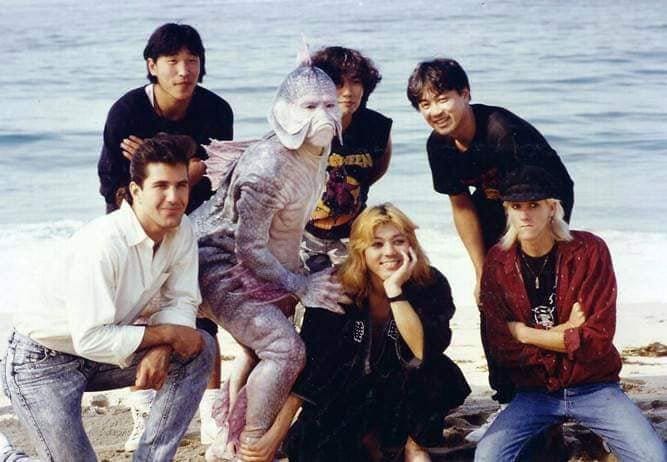
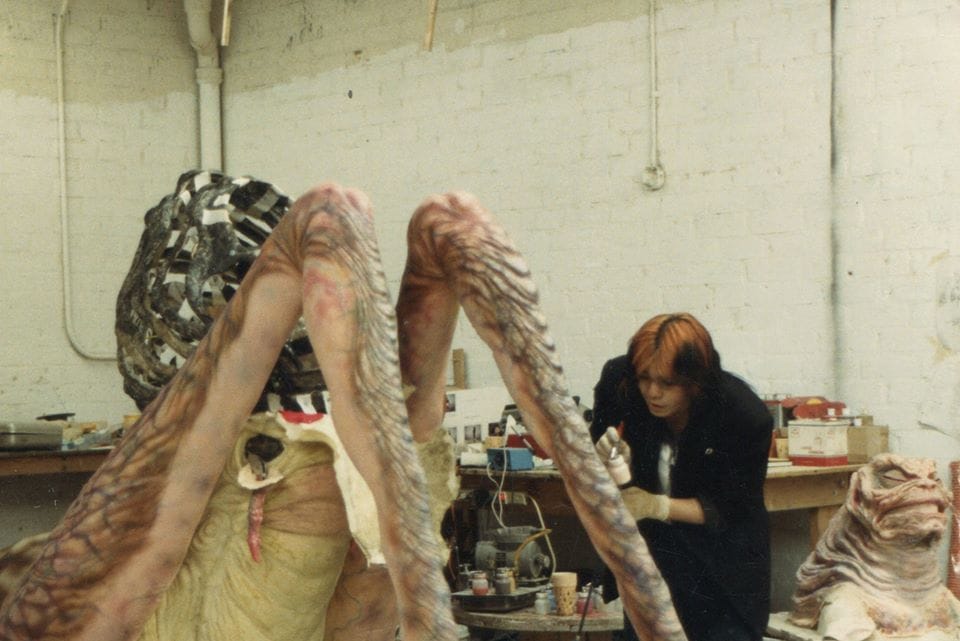
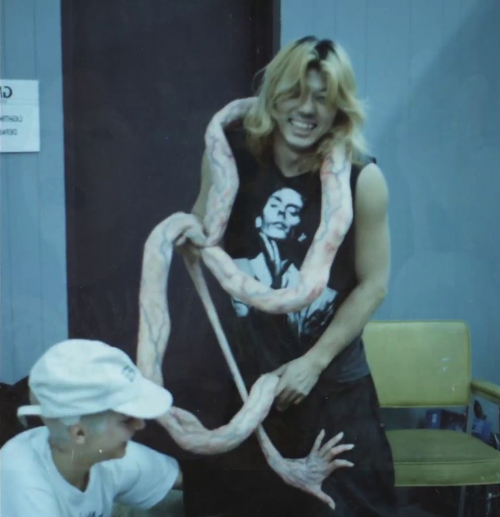
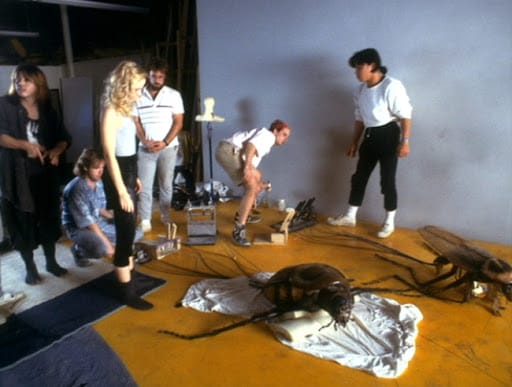
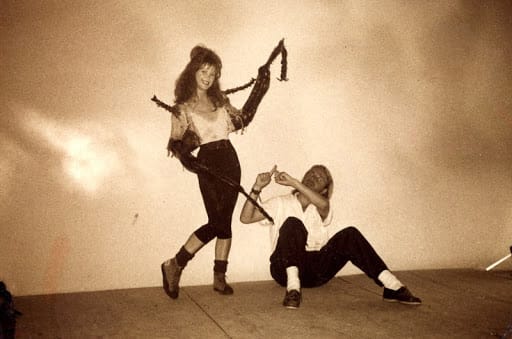
For Renny Harlin’s A Nightmare on Elm Street 4: The Dream Master, (1988), producers reached out to a variety of special effects talents to handle the sequel’s ambitious amount of practical effects work which included everything from creating multiple versions of Freddy Krueger – including his resurrected form and a 20-foot-tall chest – to crafting a “soul pizza” that contained tiny versions of the Springwood Slasher’s victims to what would arguably become the film’s most jaw-dropping moment: the transformation of workout fanatic and hater of bugs, Debbie (Brooke Theiss), into an oversized cockroach.
“I’m still not sure how it even happened, thinking about it now,” George joked. “I just remember I got the script and they were bidding out all the different effects sequences. I knew I wanted to do the roach sequence and they gave me some basic storyboards to work from. I met with Rachel Talalay and Renny Harlin, and I guess they liked my way the best. It was a lot of work, but it all went really well.”
“Brooke was such a great person and so easy to work with, too. She never complained about anything. She was having a good time even when we did her full body cast, and that’s really her inside of that roach suit at the end. She didn’t have to be inside of that suit, but she wanted to do it. That’s how much she enjoyed it, even though we put her through a lot.”
“The first thing we did was the bench press sequence, where her arms break. We placed Brooke inside this fake body, so it’s just her shoulders and her head showing, and it was pretty uncomfortable for her inside that body because she was just stuck in there for a while. We had to use a hot melt skin for her arms when they are breaking, and then, the second sequence was the bug arms which weren’t hard to do. But the scene where her face is in all that goo – oh, my god. It was really amazing how she dealt with all that ultra slime everywhere, because it’s not an easy thing to deal with. It was great, and it ended up being this very, very cool moment in the film and a great showcase for me, too. I was really lucky that I was the one who got to do the roach shot because everyone still talks about it.”
“Screaming Mad” George continued to keep busy on other projects after Dream Master, including the B-movie cult classic Curse II: The Bite (1989) when a chance meeting with Brian Yuzna would lead to him taking on another project that would catapult George’s work into the limelight yet again. “I had been in talks with this Japanese company about directing this script I had called Animus, but because I hadn’t directed before, they weren’t sure about me doing it. So instead, they asked me to get involved in this movie called Society (1989) and had me meet with Brian [Yuzna], and we hit it off immediately.”
“That first time we sat down to talk about the movie, his biggest problem with the Society script was that it was a very gory ending where it ended in a complete bloodbath, and Brian really didn’t want to go into that direction. He thought we should do something different, and that’s when I asked him about using Salvador Dali as our inspiration for the effects.”
“It just felt like if we weren’t going to do this whole bloody mess, why not try and do something very surreal, very gooey. Almost like what Rob Bottin did for John Carpenter on The Thing (1982). We knew the easy way would have to just went with all the blood and the gore, but we thought taking this route would be far more interesting. So, I came up with a bunch of weird and surreal stuff and, as long as it fit into the movie’s story, it was a go. Our budget was limited, but I still got to do everything I wanted, and I feel like there’s a lot of me in that movie. Putting all of that weirdness out there was like putting myself out there, and it’s a shame it didn’t do better in the U.S., because I think it’s a really great film.”
After finding their groove on Society, George would reteam with Yuzna for his twisted remake, Bride of Re-Animator (1989), which he still enjoyed working on, even though his creative streak was a bit more reined in this time around. “With Bride, Brian wanted to do more of a classic remake but with a newer approach, but always keeping a sense of classicism to everything, so I didn’t get a lot of opportunities to go too far with anything. He had K.N.B. doing the Bride makeups, so I got to do all the failed experiments, and that’s where I got to go nuts. I liked Bride of Re-Animator, and enjoyed working on it, but I definitely had more room creatively on Society, which is why I think I enjoyed working on that one so much.”
It was during the early 90s when George would get the opportunity to flex his directorial muscles on his first feature film, The Guyver (1991), which he co-directed alongside another effects legend, Steve Wang. Based on the Japanese manga series, the story follows a government agent (played by Jack Armstrong) who stumbles upon alien technology that is able to transform him into a super powerful human/alien hybrid who kicks all kinds of bad guy ass (which happens to include none other than Mark Hamill). Even though “Screaming Mad” George was confident in his abilities to be able to bring the visual aspects of the story of The Guyver to the big screen, he discussed how Wang became a crucial partner for him as they embarked on the project together.
“I had made those short videos years ago for my video portfolio, so I knew I could handle that even if I wasn’t that experienced. But Steve, he had done more action directing with his own projects before this, so I thought he was someone who could do all of that really well. Plus, when it comes to creating high quality masks and everything, Steve is the best. When I was first approached for The Guyver, it was actually them wanting me to do all the effects work, but I convinced them that I could direct it, too.”
“So, as we were working on it, I knew Steve was going to be the one who could really do the action in The Guyver very well. He knows so much about action movies, and he could always see the best way to get these scenes in-camera, and because I realized that being a director was going to be a lot of responsibility, it was great to work with someone who could split the work load with me, and we’d have fun doing it. He’d direct the action scenes and I’d take on the effects scenes, and it worked out great. The suits and the creatures were all very high-quality, which only made the movie even better.”
“Having Mark (Hamill) involved with The Guyver was a great help too,” George continued. “Everyone on the film were all very professional, and there were no egos on that set, but he just understood everything we were trying to do, and somehow made it all better. Plus, being a first-time filmmaker, to have someone like Mark working on your film is so helpful. But I think both Steve and I learned a lot on that film.”
Even though he was able to enjoy being at the helm of a feature film for The Guyver, “Screaming Mad” George continued to find a great amount of success in the realm of special makeup effects as the 90s rolled on, including films like Tales from the Hood (1995), Progeny (1998), and Children of the Corn III: Urban Harvest (1995). But it was early in the decade when George would connect with one of the most famous cinematic time travelers of all time – Alex Winter, who portrayed Bill S. Preston, Esquire in both of the Bill & Ted movies – for the oddball comedy, Freaked (1993), which was in many ways a spin-off of the MTV sketch show The Idiot Box (1990-1991), which Winter also had a hand in creating.
“Alex Winter and I met at gallery opening that had a lot of low-brow art and pop-surrealism pieces. There was lots of weird stuff, I remember, and it felt just like what you’d find on the L.A. art scene at that time. There were a ton of people there, and I remember Alex and I met, and he was telling me about this film he was developing called Freaked, and he was going to have the Butthole Surfers in the movie and doing the music. I am pretty sure at first it was supposed to have more horror stuff, because he wanted to make a really fucked-up movie, and he wanted to have me to design all the characters.”
“When I read the first script, it surprised me. It felt so underground, and so out there, I just didn’t think that movie was ever going to get made. I guess Alex started to understand that, too. He got together with Tom Stern (who was also behind The Idiot Box), and so by the time he finally finished his final draft, he was able to get Fox interested in it. I did all the initial design work, but then things started to get changed around a lot and it felt like the movie was trying to be more mainstream. Especially when he started meeting with all the producers. And then, some other companies got involved with the creatures too, which at first I wasn’t sure about, since I had been designing from the beginning. I realized though that it was actually a very big job for just one company, so I think it was a very smart decision to get other companies involved. There was a lot of work to do on Freaked, and I am happy with how everything turned out.”
Even though he continued to work on features, George also began to showcase his talents in the world of music, as he collaborated with a proverbial “Who’s Who” of nineties rock. “I met this photographer named Dean Karr who is a really incredible photographer. He was doing CD covers and promotional pictures at the time, and he began directing promotional videos too. I can’t remember what his first video was, but his second one was for Marilyn Manson’s Sweet Dreams video, and I got to do some of the makeups on Marilyn and a few other things too. And after we did the Sweet Dreams video, Dean was going to shoot Antichrist Superstar album cover and all the inside promotion photos. He asked me to come with him to do Marilyn as the worm that starts hatching and turning into this demon angel, with this cracked body. And I did all that makeup.”
“But because this wasn’t the movies, this kind of work is something you usually don’t get the credit for. So many people are surprised when I tell them that I worked with Marilyn, or that I worked a bunch with Dean as he was getting more and more music video jobs. That work kept me very busy – I did the beating heart at the beginning of Nine Inch Nails’ Closer video, I worked on several Ozzy Osbourne videos, and I worked on the Make Me Bad video for Korn, with the bug crawling under the skin. I also made a bunch of masks for Slipknot too over the years.”
As he kept busy on the music video front, George was called back to Japan to take care of his father, and he also began to re-establish himself professionally through various projects and teaching new generations of artists. “When I came back to Japan, I directed a few music videos for a band over here, and there’s also a famous baseball player who likes to wear masks, and so I reworked one of my old masks for him to wear, which was a big thing for fans. I wasn’t really looking for special makeup jobs, so I started teaching and just became more laid back. I’d also been working on some projects for myself, just because I wanted to be creative again without restrictions, like I was doing in high school. So now, I’m the boss. Before, directors were always the boss. But now I only have to answer to myself.”
“And, it’s not that I don’t want to do any makeup effects or anything. If somebody asked me to do effects, if it’s interesting, I’ll do it. But I’m not really going around looking for jobs right now. I like doing different things, so I’m okay with just doing whatever I like doing right now.”
While there’s no denying that “Screaming Mad” George’s work as an effects artist is truly in a class of its own, he’s also proud that he’s been able to establish himself creatively in other fields as well throughout his entire career.
“There are so many people out there who might only think of me as just a special makeup effects artist, but I’ve been lucky to have done a lot of different things. I was a punk band guy. I used to make industrial gothic music. I’m a painter. I’m a director. And I still want to direct – I’m still working on the script for Animus. I think I just want to keep doing things I enjoy, and wherever it takes me, I’m happy to go there.”